Drought Stress Monitoring
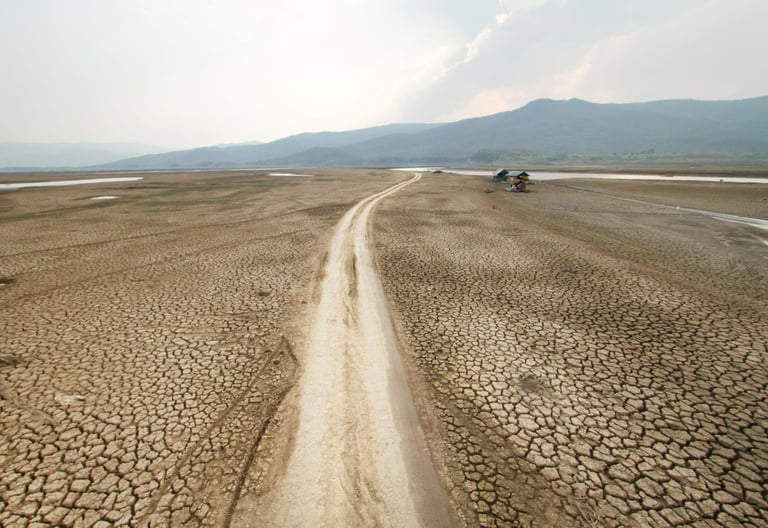
Droughts are rapidly becoming one of the most critical global risks of the century, with profound implications for economic stability, food security, energy production, public health, infrastructure resilience, and geopolitical stability. Unlike sudden disasters, droughts often develop progressively and silently, making early detection one of the most decisive factors in preventing systemic crises.
Today, nearly 4 billion people experience severe water scarcity for at least one month every year, while around 75% of the global population lives in regions affected by water insecurity, drought pressure, or declining freshwater reserves. The United Nations has warned that the world is entering an era of “water bankruptcy,” characterized by the unsustainable depletion of aquifers, reservoirs, wetlands, glaciers, and river systems.
The economic consequences are equally severe. Current drought-related damages exceed $300 billion annually worldwide, affecting agriculture, industry, logistics, energy systems, and urban infrastructure. By 2050, nearly 6 billion people could face clean water scarcity, while climate-driven hydrological stress is expected to intensify across some of the world’s most economically strategic regions.
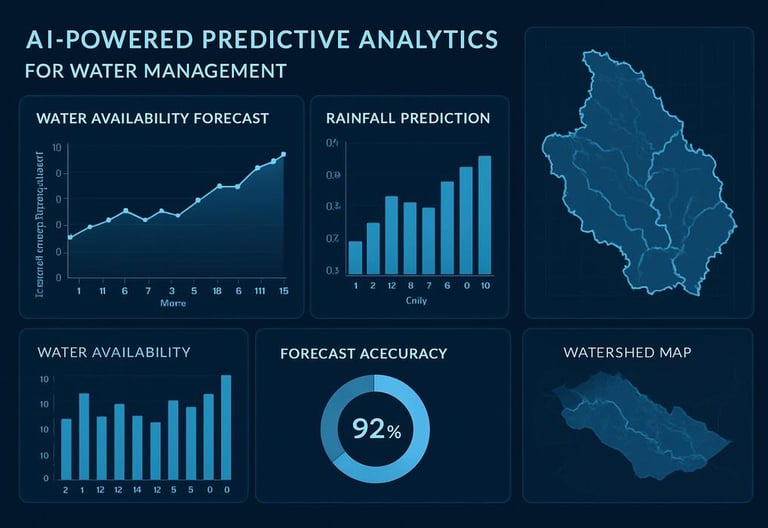
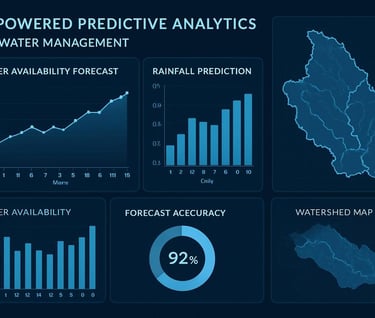
Aegir Resilience addresses this challenge through a predictive drought intelligence system designed to detect the earliest indicators of water stress before emergency thresholds are reached. The platform continuously monitors reservoir storage drawdown curves, aquifer recharge rates, precipitation anomalies, hydrological deficits, climatic trends, and infrastructure stress signals in order to anticipate the probability and severity of future drought conditions.
By combining AI-driven forecasting models with real-time environmental monitoring, the system can estimate reservoir stress and declining water availability weeks or months ahead of mandatory restrictions. This allows governments, utilities, industries, infrastructure operators, and financial stakeholders to act proactively rather than reactively.
The ability to anticipate drought conditions before they escalate is becoming strategically essential. Severe droughts can trigger agricultural collapse, energy shortages, industrial disruption, food inflation, forced migration, and increasing social instability. Early-warning intelligence therefore represents not only an environmental tool, but a critical resilience mechanism for protecting economies, infrastructure systems, and territorial stability in an era of accelerating climate uncertainty.


Reach us
filippo.verre@aegirresilience.com
Request a technical briefing
Response within one business day
(C) 2026 Aegir Resilience - Predict to Prevent
Weeks ahead — not hours behind